

“Her filthiness is in her skirts; she remembereth not her last end; therefore she came down wonderfully: she had no comforter. O LORD, behold my affliction: for the enemy hath magnified himself.” Lamentations 1:9
The book of Lamentations is a funeral. Jerusalem is the one in the casket. Jeremiah is the one weeping over her.
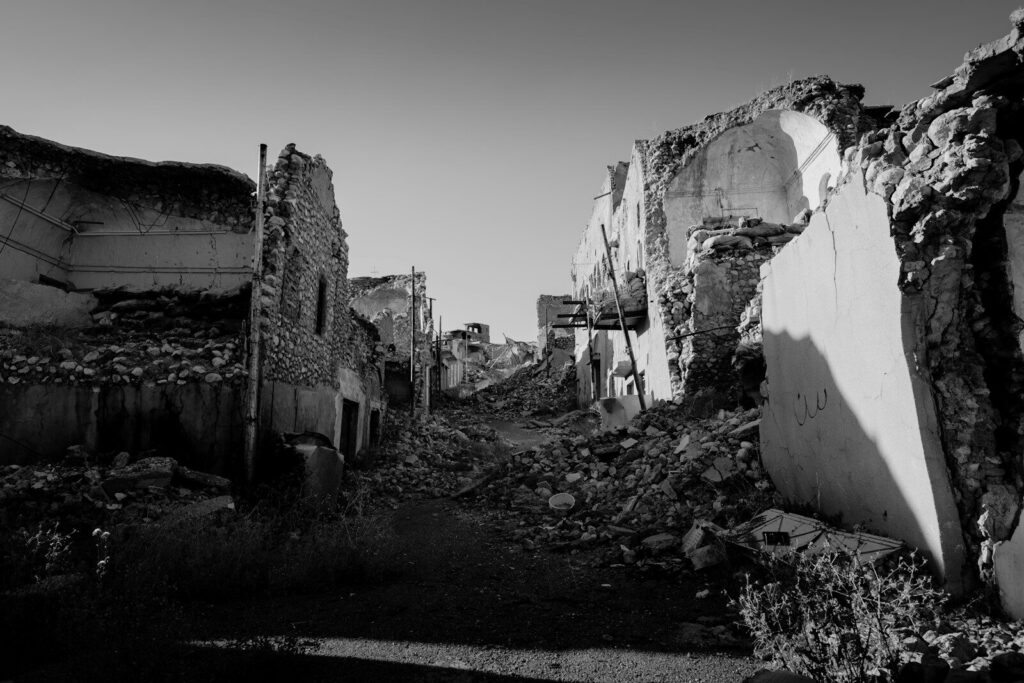
The year is 586 BC. Nebuchadnezzar has broken the walls, burned the temple, and marched the people off in chains. The city once called “the perfection of beauty, the joy of the whole earth” now sits alone in the ashes like a widow.
For eight verses Jeremiah describes her. Then in verse 9 she speaks for herself, and her first words are a cry. “O LORD, behold my affliction: for the enemy hath magnified himself.”
I want to stop on that last phrase. The enemy hath magnified himself. In the Hebrew it means he made himself great. He swelled up. He strutted. He stood over the fallen city and crowed. Babylon did not merely win. Babylon gloated.
If you have walked with God for any length of time, you know that feeling. You stumbled. You failed. And before you could even get up, the enemy was standing over you with his chest out, telling you that you were finished.
This one verse tells you how he got there, what his boasting reveals, and where his boast comes to an end.
How the enemy got his chance
Babylon did not create the opening. Jerusalem did. The first half of the verse explains the second half.
“Her filthiness is in her skirts.” The skirts are the hem of the garment, the part that drags on the ground where everyone can see it. Jerusalem’s sin was not hidden under the robe. It was public. Her idols, her oppression of the poor, her false prophets, all of it was out in the open. Jeremiah warned her for forty years. She would not wash.
“She remembereth not her last end.” This is the root of it. She stopped thinking about where the road was going. She lived for the moment and never considered the harvest. Forgetfulness like that is not an accident. You have to work at it. You have to ignore the preaching, silence the conscience, and shrug off the Spirit’s conviction, year after year, until the thought of judgment never crosses your mind.
“Therefore she came down wonderfully.” Filthiness plus forgetfulness equals falling. And she did not come down gently. Wonderfully in the old English means astonishingly. The onlookers gasped. A city that had stood for four hundred years was gone in weeks.
That is the moment the enemy magnified himself. Not while she stood. While she lay in the dust.
I once heard of a man who came home to find his house ransacked. No broken glass. No pried frame. The back door had been left unlocked for months because it was convenient. The thief did not have to work for it. He walked in, and then he bragged about how easy it was.
Babylon did not pick the lock. Jerusalem left the door open. The enemy who walks through an open door always boasts afterward.
What the boast reveals about the boaster
Scripture uses this exact expression again and again. Moab “magnified himself against the LORD.” Ammon magnified herself against God’s people. The little horn in Daniel “shall magnify himself in his heart.” David’s enemies “magnify themselves against me.” Every time the phrase appears, it tells us something about the one doing the boasting.
The boaster pretends. Babylon strutted through Jerusalem as though Babylon had won. But Babylon was a tool in the hand of God. Isaiah had said it of Assyria a century earlier, “Shall the axe boast itself against him that heweth therewith? or shall the saw magnify itself against him that shaketh it?” The saw taking credit for the carpenter’s work. That is the enemy’s pretence. He claims a victory that was never his. When you stumble, Satan says, I have you now. He does not. He only ever operates within the bounds God allows.
The boaster persecutes. He does not stop at the victory. He kicks the one who is down. David put it exactly, “When my foot slippeth, they magnify themselves against me.” When does the enemy boast? When your foot slips. Not when you are strong. When you are weak. He is a persecutor of the fallen, and he always will be.
The boaster perishes. Here is the glory of it. Every enemy in Scripture who magnified himself was brought down by the very God he boasted against. Moab was made to wallow. Ammon became as Sodom. The little horn was “broken without hand.” And Babylon, who magnified herself over Jerusalem in 586 BC, fell in a single night in 539 BC while her king was drinking from the temple vessels.
Think of Sennacherib. His commander stood outside the walls of Jerusalem and shouted. He mocked Hezekiah, mocked the people, and then lined the LORD up beside the gods of Hamath and Arpad as one more idol to be swept away. Hezekiah spread the letter before the LORD. And God answered the boaster with a question, “Against whom hast thou exalted thy voice, and lifted up thine eyes on high? even against the Holy One of Israel.”
That night 185,000 Assyrians did not wake up. The enemy magnified himself at the gate. God magnified Himself in the camp.
Pride that boasts against the LORD has already signed its own death warrant. The boaster never gets the last word.
Where the boaster is silenced
“She had no comforter.” That phrase is repeated five times in this one chapter. Egypt did not come. Her friends became her enemies. The priests were dead and the prophets were silent. She had nobody.
And yet, with no comforter on earth, she lifts her face and speaks. It is the first prayer in the whole book. Six words. “O LORD, behold my affliction.” In those six words the boasting enemy begins to shrink.
Notice what kind of cry it is.
It is honest. She does not say, behold my innocence. She does not blame Babylon. She does not explain away the filth on her skirts. She says, look at what I am. The enemy magnifies himself over a people who make excuses. He is silenced by a people who confess. “He that covereth his sins shall not prosper: but whoso confesseth and forsaketh them shall have mercy.”
It is humble. She cries to the LORD. Not to Egypt, not to Edom, not to herself. The God she forsook is the God she runs to, because there is no other comforter, and she finally knows it. The enemy magnifies himself. The saint humbles himself. And God lifts up the one and casts down the other. “God resisteth the proud, but giveth grace unto the humble.”
And it is heard. The same book that opens with “she had no comforter” arrives in chapter 3 at the greatest word of hope in the Old Testament, “It is of the LORD’s mercies that we are not consumed, because his compassions fail not. They are new every morning: great is thy faithfulness.” By the end of that chapter Jeremiah can write, “Thou drewest near in the day that I called upon thee: thou saidst, Fear not.”
The Comforter she did not have in chapter 1 draws near in chapter 3.
How is a magnified enemy eclipsed? By a magnified God. “O magnify the LORD with me, and let us exalt his name together.” When the enemy looms large in your eyes, the remedy is not to magnify yourself. It is to magnify the LORD until the enemy is out of sight.
There was one day when the enemy magnified himself more than on any other. At Calvary the Son of God hung bleeding while soldiers mocked, rulers derided, and a thief railed. Hell must have roared. The enemy stood over the fallen Christ and said, I have won.
Three days later the tomb was empty. And Paul tells us what the cross looked like from heaven’s side, “And having spoiled principalities and powers, he made a shew of them openly, triumphing over them in it.” The enemy’s greatest boast became the enemy’s greatest defeat.
That is why the believer has an answer today. “If any man sin, we have an advocate with the Father, Jesus Christ the righteous.” The accuser speaks. The Advocate answers. And the Advocate has never lost a case.
A word to you
Maybe you are reading this with filth on your skirts and the enemy standing over you. Nobody understands. You have no comforter.
Then do what Jerusalem did. Cry out. Be honest about the sin. Be humble before the One you walked away from. And you will be heard. He draws near in the day you call upon Him, and He says, “Fear not.”
If you are standing today, check your skirts and remember your last end. The enemy is patient. He waits for the unlocked door. Do not give him one.
And if you have never come to Christ at all, know this. Every one of us has filthiness in our skirts, and every one of us has an enemy who intends to magnify himself over our souls for ever. There is one Comforter. His name is Jesus. He came down, not for His sin but for yours, and He rose again to silence the accuser for all who call upon Him. “For whosoever shall call upon the name of the Lord shall be saved.”
The enemy’s boast ends the moment you magnify the LORD.
