

A Bible Preaching Baptist Church in the Waterloo Region
Our Sunday services are at 10:30 AM and 6:00 PM. We’d love to have you join us—there’s a seat waiting for you!
Sign Up for KBC Weekly
Our weekly bulletin, in your inbox every Saturday.
New to our church?
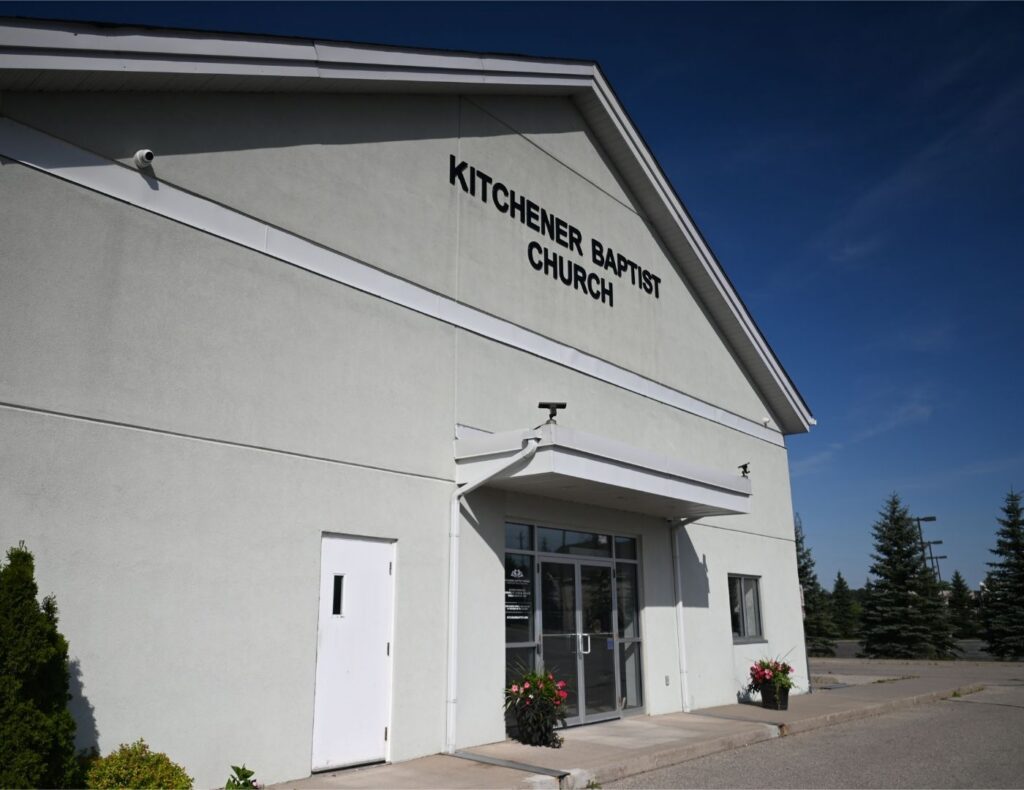
Welcome to Kitchener Baptist Church! Guided by the Word of God, it has been the desire of our church over the last 35 years to be the kind of church that honours the Lord. You can learn more about our church below.
Join us this week
A church that loves the Bible, desires to be Christ-like in an ungodly world, and to spread the good news of the Gospel to the regions beyond.
 Pray for Pastor Burns and His Family
Service times
- Sunday10:30 AMMorning service
- Sunday6:00 PMEvening service
- Wednesday7:00 PMWednesday service
- Friday7:00 PMYouth Unplugged
Grace That Teaches
“For the grace of God that bringeth salvation hath appeared to all men, 12 Teaching us that, denying ungodliness and worldly lusts, we should live soberly, righteously, and godly, in this present world;” Titus 2:11-12
When I think about the grace of God, I usually think first about what it saved me from. Paul wants Titus to see what it does after that. "For the grace of God that bringeth salvation hath appeared to all men, Teaching us."
Grace is not only a gift; it is a teacher. The same grace that forgave us goes to work in us. It teaches us to say no, "denying ungodliness and worldly lusts," and it teaches us to say yes, to "live soberly, righteously, and godly, in this present world."
Some people think grace means it does not matter how we live, because we are forgiven anyway. Paul says the very opposite. Real grace never makes a believer careless about sin. It makes him want to please the One who saved him. I have watched grace do that in people, and I have felt it in my own heart.
And grace gives us something to look forward to. We are "Looking for that blessed hope, and the glorious appearing of the great God and our Saviour Jesus Christ." A man who is looking for the Lord's return lives differently today. I know I do, on the days I remember to look.
I am thankful God did not save me and then leave me the way He found me. He is still teaching me, one lesson at a time, and He is patient with a slow learner.

The whole Bible, open and marked up
Read, underline and keep notes on any verse — with Strong’s Greek and Hebrew, cross-references and 7,490 study notes alongside the text.
God is not a man, that he should lie; neither the son of man, that he should repent: hath he said, and shall he not do it? or hath he spoken, and shall he not make it good?
Read Numbers 23:19 ›- Integrated study notes
- Strong’s Greek & Hebrew
- Instant cross-references
- Keyword search
“Let not your heart be troubled: ye believe in God, believe also in me.”
Read John 14:1Upcoming Events
Timeless Truths Radio Ministry
Timeless Truths Radio Ministry has been broadcasting the Word of God to the Waterloo Region for over eight years. Every Sunday morning at 8:30 AM our program airs on 93.7 in the Waterloo region.
- Station
- 93.7 FM
- Airs
- Sundays, 8:30 AM

Giving.
“Every man according as he purposeth in his heart, so let him give; not grudgingly, or of necessity: for God loveth a cheerful giver.” 2 Corinthians 9:7
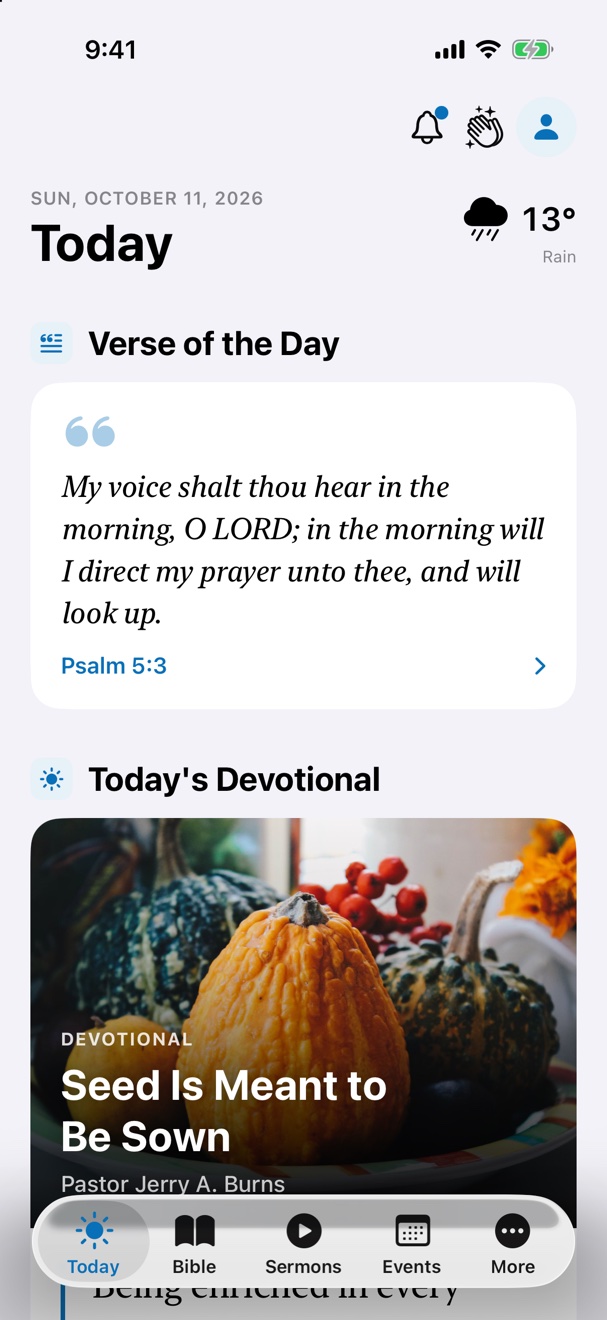
Download our Church App and Stay Connected!
The new app is not in the App Store yet — it is still being tested. See what is coming.